How Content Can Help Drive More Sales
How Content Can Help Drive More Sales
A common issue that most online websites and marketers have to tackle is how to get more audience engagement and improve sales.
One way to improve engagement and get more people talking about your brand is to create interactive content. It encourages users to 'take part' in the experience rather than passively read through the website.
As marketing experts, we have created an article that explains how you can drive sales through interactive content.
Tips for Creating Content That Drives Sales
1. Understand Your Audience
The most basic aspect of audience engagement, but also where more than a few brands get it wrong, is to understand your audience. When we say 'understand,' what we really mean is that you need to identify their needs, challenges, and expectations.
Conduct in-depth research and also questionnaires that can help you understand audience behavior.
With the right tools, you can find vital data about specific audience behavior in your sector and use it to your advantage. High-intent behavior should be classified as a top priority for your SEO team. It is always a good idea to create content that answers specific questions about a product.
2. Focus On Solving Problems
Something that most brands lose sight of at different points in their evolution is what sales is actually about. The key here is to understand that you're not selling a product but rather a solution to an issue your customer is dealing with.
Create content that addresses customer pain points and offers them practical solutions.
While the occasional promotional message can work, forcing users to only use your product to solve their issues can backfire.
Create educational content that demonstrates your expertise in your industry and can be shared easily. It is key to position your product or service as a solution to a problem rather than a list of features they're never going to use!
3. Improve Your CTAs
While we're on the topic of guiding users, don't forget that CTAs are your best friend. They can help your customers understand your product better while you also gain traction on your website.
The language you use for your CTAs should be clear and compelling. Ideally, it should have a different background or a button format to make it stand out on the page.

With CTAs, you can direct user attention to parts of the page or get them to commit to an action. Downloading content, redirecting them to a page, or asking them to fill a form should all be done with a CTA. Spend time testing different CTA wordings and colors to ensure maximum engagement with them.
4. Leverage Visual and Interactive Elements
Rather than sticking to plain, boring text, marketing teams would be well served to include visuals along with interactive elements on their pages.
Create charts, informative images, and explainer videos that can help them understand how to get the best out of your products. It is a good idea to offer this to them free of cost and make it easily shareable.
Use images to break up huge walls of text on longer content formats. Remember to clearly mention the source of the image where required and a short description as well. Ensure that the images are high quality and not pixelated, which users detest.
5. Ensure Content Aligns With Buyer’s Journey
Creating content just to get 'more engagement' is not going to turn out well. Rather, focus on making content that coincides with the different parts of the buyer journey. The buyer journey can be broadly classified into awareness, consideration, and decision.
Work on content that can be tailored to these parts of the funnel and ensure you customize it as required.
Brands should especially pay attention to smoothly transitioning the clients between each phase. This is where most of them lose potential customers. Sharing evidence-based content like case studies and verified comparisons is vital when it comes to engaging people.
6. Maintain Consistency Over Brand Messaging
A huge fact of customer engagement is that customers expect to see consistent brand messaging. In other words, you need to keep your brand tone of voice consistent across all platforms, including your social channels.
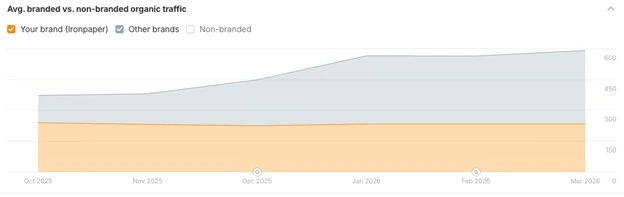
Even when messaging people from your business handles, remain professional and courteous. Reinforce your brand value on every piece of content you create, however small or short.
All of these build a strong image of your brand and are vital when it comes to word-of-mouth marketing. A consistent brand makes it easier for people to trust and also share it with friends and family.
Another important thing is to ensure that your visual style aligns with the message. Finally, keep communication as transparent as possible and don't hide behind fine print.
7. Track and Optimize Content Regularly
Many brands forget that content performance also relies on regular optimization sessions! Content is never going to be an asset that you can just create and forget.
Monitor engagement metrics and understand where performance is lacking on your content framework. Identify content assets that perform well and learn from them to create better-performing posts in the future.
There are powerful tools like Ahrefs, Hubspot Analytics, and SEMrush, which can help analyze content and fine-tune your strategies. It is also good practice to give older content assets a 'makeover', especially if they have a lot of visitors.
How to Create Interactive Content to Engage Your Audience
1. Use Interactive Content
The simplest way to engage your audience is to give them a reason to! Interactive content like quizzes and polls can work really well if you create them with high-intent keywords. It is vital to do your research on the trending topics in your niche before you create it.
Polls also have the advantage of getting your customers' thoughts about a specific issue or product. Surveys are another important type of information collection for brands, but ensure that it isn't too long, and you appropriately reward users for participating in it.
Letting the users know results in real-time or at least as quickly as possible definitely helps engagement.
2. Create Powerful (And Free!) Assessment Tools
Any industry today can make use of a tool that can assess specific factors related to the business. These tools should provide a quick and practical solution to problems that users have.
A good example is Moz offering free SEO tools on their website for users to take advantage of.
There are several tools like DA checkers, brand strength checkers, and keyword research tools, just to name a few.
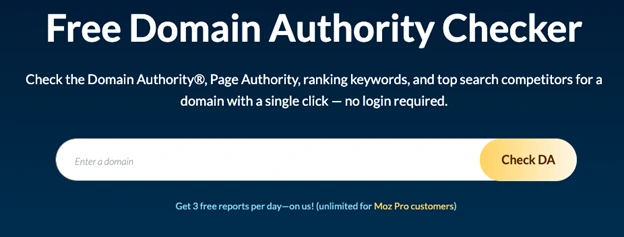
The takeaway from the Moz example is that the tools need to be easy to use, accessible to all, and related to your niche. Having an easy way to share their results with others also helps link back to your website.
3. Share Informative Infographics With Clickable Elements
Infographics by themselves are a wonderful visual platform that can break down complex topics for the average user. But since everyone is doing it, consider creating an interactive infographic to stand out from the crowd.
These add a layer of engagement with the user while still maintaining the ease of use of a visual platform.
The animations or interactive elements don't even have to be elaborate. A simple expanding section on a text-heavy topic is more than enough. Users can click these sections to understand more about the topic if they so choose.
4. Work On Interactive Tutorials and Guides
The best way to share tutorials with users is to make them interactive. It comes as no surprise that people find interacting with guides makes them easier to understand. This is even true for critical industries such as medical science.
A study found that 78% of participants found interactive tutorials were a lot more helpful than passive tutorials.
Interactive tutorials also give control to the people who partake in them. They can learn at their own pace while exploring in depth through interacting with the tutorial. Ensure that visuals are clear and the examples used are easy to understand.
5. Opt for Gamified Content for More Engagement
Gamified content has been around forever, but it has still proven to be successful. Adding points, rewards, and other score-tracking aspects to content is a great way to get people interested in your content.
Adding challenges that make use of these scores can help motivate people to participate and share.
Creating leaderboards where users can see their own rankings versus those of other participants is a great step to increase engagement. Reward users for accomplishing specific goals or milestones and announce it on your social media handles.
6. Encourage Users to Send in Their Creations
User-generated content (UGC) is a great way to get more people to engage with your brand. Big brands encourage users to add their contributions to their social handle, which is then featured in contests or promotions.
A good example when it comes to UGC catapulting a brand to fame is Iconic London. The brand's entire social media handles are filled with submissions from various users who use their products. They've also made these images shippable, which means people who love the 'look' can shop for those products - a direct increase in sales!
7. Customize Content Based on User Behavior
Every user is unique in their choices and tastes.
A brand that is able to create content that caters to their preferences is going to get their business! With the advent of technology today, dynamically changing websites to display what a particular user is looking for has become more common.
A simple example of this is Amazon and how they display different products to people based on their browsing preferences. Delivering tailored experiences to users browsing your content makes it a lot more engaging, which will result in a lot more sales.
FAQs on Content Increasing Engagement & Sales
1. How Does Interactive Content Improve Sales?
Interactive content encourages users to spend more time on the website. The longer they spend on a website, the chances of making a sale go up dramatically. It also captures useful browsing behavior, which can help user targeting.
2. What Types of Interactive Content Are Best for Engagement?
The easiest types of content to create are polls and quizzes, but they still have a lot of engagement. Assessment tools or calculators can take time and expertise to implement, but offer much higher engagement numbers in the long run.
3. Why Is Interactive Content Better Than Static Content?
With static content, there are more chances of users clicking away due to the content being uninteresting or boring. Interactive content encourages users to participate and control the narrative. It also provides a much more personalized experience, which is vital to engagement.
4. What Are the Ways You Can Measure the Success of Interactive Content?
There are several KPIs for tracking engagement metrics like time on page, interactions, bounce rates, clicks, and completion rates, just to name a few. Most SEO tools like Ahrefs, SEMrush, and Google Analytics can measure these metrics.
Key Takeaways
● Create interactive content that focuses on audience intent and acts as a solution to their issues.
● Understand what audience expectations are before you plan because interactive content takes time to build.
● Add visual and interactive elements to your website to make long-form content or complex information more engaging.
● Encourage user participation through UGC on social media and your website to get people interested.
● Measure and optimize content on a regular basis to improve it and gain better sales.