PPC Advertising: The Fast Track to Higher Revenue
PPC Advertising: The Fast Track to Higher Revenue
The global market is progressing at a rapid pace. With hundreds of thousands of brands joining the fray, you need to make an impact quickly if you want to stay in the race.
While organic strategies like SEO are great in the long run, to get immediate results, you need PPC (Pay-Per-Click) marketing.
Let's take a look at the obvious advantages and other significant factors of PPC marketing in detail.
Importance of PPC
1. Immediate Visibility on Related Searches
If you're looking for a way to get improved visibility as soon as your product hits the market, then choosing PPC is a great way to start.
As soon as you start the campaign, your ad will appear at the top of related search queries instantly. This beat waiting around for your website to gain momentum, like for organic methods.
Depending on the niche, organic ranking takes a long time to show up on search queries. Also, PPC marketing can help you dominate branded keywords in a way that organic marketing cannot. For product launches and promotions, PPC ads can get the word out quickly.
2. Direct Communication With Target Audience
Another obvious advantage of the PPC marketing process is that it allows you to 'target' your audience with much more granularity than organic methods.
With PPC, you can create specific messages that you think will appeal more to users from a certain demographic. It gives you more options to get noticed, and you also control exactly what your prospects see first.
Creating ad copy that aligns with your current promotion can give you an advantage, especially when you're competing with well-entrenched brands in a competitive niche. With the right PPC copy, you can directly address customer pain points and concerns, which makes them choose you over your competitors.
3. Targets High-Intent Search Queries
High-intent search queries are a gold mine of opportunities for all businesses. Understandably, this is also why they are hypercompetitive.
Ranking organically for high-intent queries will take time, considering that your competitors have a headstart. But with PPC, you can directly bid on keywords that have transactional intent.
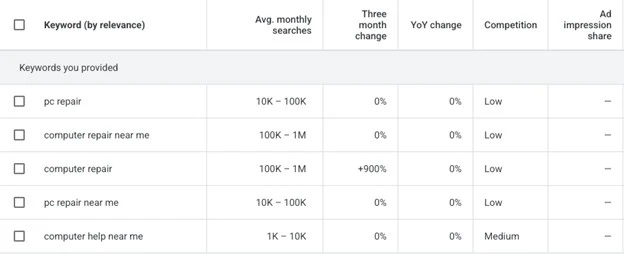
PPC gives you a platform that you can use to get in touch with bottom-of-funnel prospects that might have been left out by organic methods.
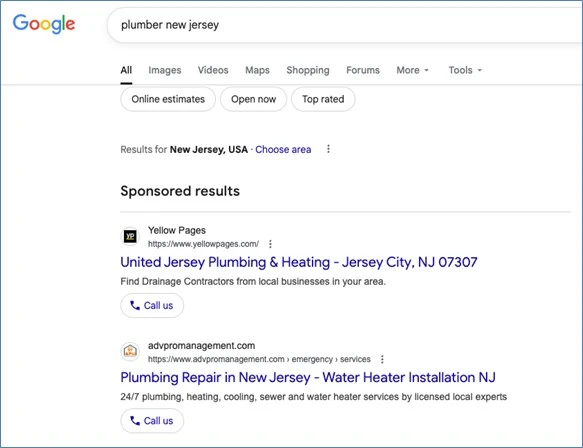
PPC is also a great option to capture interest from users who are actively comparing products or services. Urgent buyers tend to choose the first few links of a search, and that is exactly where PPC places your ads!
4. Growth Is Scalable and Measurable
One of the biggest assets of PPC is its ability to scale well to include larger numbers. Increasing ad spending here will directly result in higher qualified traffic numbers. This is in stark contrast to organic methods, where there is a ceiling for results, where even higher spending will not get you any better results.
PPC is also more trackable, where you can record every click, lead, and conversion that you've acquired through an ad. It allows marketing managers to accurately measure their cost per acquisition and create better forecasts for results. This kind of accuracy also results in tighter marketing budgets without wasted spending.
SEO vs. PPC: Which Drives Revenue Faster?
1. Higher Speed to Market
Something that organic methods cannot beat when it comes to PPC is the speed with which you can enter the market. With PPC, you can launch an ad campaign within days rather than weeks or months. For events like product launches, getting started with PPC can let you get the word out immediately.
When you get a campaign started, your ad instantly shows up on related search queries, completely eliminating the lead time associated with organic marketing. There are several advantages that you have with PPC. For example, it can help you capitalize on seasonal trends like holidays or vacations.
2. Better Control of Narrative
An issue that you get with organic marketing is that once you've set an ad campaign, it is more or less set in stone. Any changes that you make to it mean restarting the process right from scratch. With PPC, you can actually run A/B testing with different ad copies and make changes in real-time with no risk or delays.
The ability to quickly change and publish ads helps you streamline brand narrative and ensure that you're focusing on the right aspects. Ads that are not performing as expected can be paused immediately to save budget or reworked.
Your whole marketing campaign becomes more 'agile', allowing you to adapt to different trends quickly.
3. Predictable Lead Generation
Predictability is vital when it comes to budgeting for advertising campaigns.
With organic marketing, things can become slightly open-ended, and spending can sometimes rise dramatically based on prevailing market trends and competitors. But with PPC, you can assess accurately how much you're spending and make changes accordingly.
Another huge advantage of choosing PPC marketing over organic is that you get immunity from algorithm updates and downtimes. You don't need to worry about drops in ranking due to updates. The ads are always visible right at the top of the search results as long as you keep the ad budget topped up.
4. Improved Market Positioning
When it comes to brand image, positioning is everything.
PPC can help your brand appear alongside other powerful brands in your niche quickly. This kind of placement helps you get ahead of your smaller competitors and puts you in a more premium position. It can help your brand strategically and also get more users looking for alternatives to your competitors.
Constantly placing at the top band of searches also influences brand authority. People are more likely to trust your brand since it has better visibility. For smaller businesses, it improves brand recognition and recall much more than other marketing methods.
The Hidden Costs of Poorly Managed PPC Campaigns
1. Wasted Budget on Low-Intent Searches
While a properly run PPC campaign can save you money, the choice of the right keywords can make a huge difference. Ensure that you do your research when selecting the keyword profile for your business. If the terms are too broad, then the chances are high that people clicking on it are not going to convert.
One idea to improve conversions for PPC is to target informational queries rather than purely transactional ones. It is important to get the buyer persona right, as it can help with proper audience segmentation, which is key to high-intent searches.
All of these steps will help you prevent spending on clicks that don't convert.
2. Poor Conversion Tracking
To measure the success of a PPC campaign, conversion tracking should be as accurate as possible. Without proper measurements, you will not have clarity on cost per acquisition.
Audit your conversion methods to ensure that conversion attribution tracks correctly for different sources. Tracking pixels need to be configured based on the various websites on which you've added them.
Conversion tracking forms the basis for several important metrics, including revenue. It is also vital when business decisions need to be made regarding the PPC campaign.
Conversion metrics also reflect how successful the ad campaign has been. Without proper conversion tracking, you would be relying on incomplete data for calculations.
3. Weak Ad Copy and Landing Pages
High-quality content is the foundation of everything that is PPC. Most people make the mistake of thinking that ad content is not that important, but they are wrong.
Generic messages that people see on a daily basis will not entice them to click your ad. You need to be creative with your wordplay and narrative to establish a bond with your potential customer.
Another facet to focus on is the landing pages. When people click the ad, they have certain expectations for your business landing page.
If there is a 'disconnect' between the content on the ad and the landing page, they are going to click away. Also, ensure that the landing page loads quickly with a clear and noticeable CTA that connects the ad with the content.
AI and Automation in PPC: Faster Results, Higher Revenue
1. Smart Bidding Focuses on Revenue
'Smart' bidding with the help of AI can cut down a lot of inherent latency in the PPC campaign while also adding value.
AI-assisted tools can help you optimize your PPC ad campaign for conversion value and not just for getting clicks. Another important aspect of AI is that you don't have to manually adjust the various factors of your campaign.
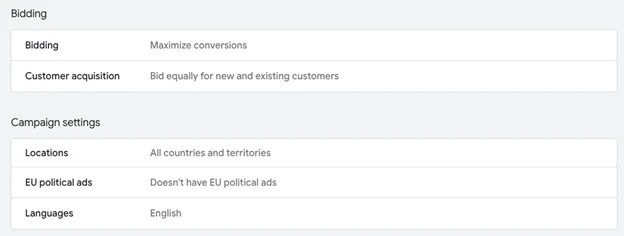
AI can adjust the bids in real-time based on different tolerances that you've preset, making it a really useful tool. It can also highlight other high-performing keywords in your segment that can be included in your campaign. Using AI can almost completely eliminate manual errors in PPC campaigns.
2. Machine Learning Improves Over Time
A unique aspect of AI is that it really does improve results over time. Machine learning algorithms can learn from historical data and current market conditions as well. It adjusts audience targeting continuously to get the best results for the PPC campaign.
More advanced models can automate everything in the campaign, including optimizing headlines and ad copy.
AI tools can identify patterns that people might miss and leave nothing on the table. An important benefit of AI systems is that they scale well across multiple campaigns, unlike human input. It can also adapt to various market situations without any need for human intervention.
3. Quicker Automated Testing
The one area where AI has a pronounced effect in PPC marketing has to be testing. Testing is one of the most time-intensive processes in the funnel, but it also needs to be done extensively with great care.
Getting it done with a team of people is going to be strenuous, not to mention that it takes away from other important tasks they could be doing.
Enter AI automation, which can run the testing process all by itself and much better than a team of humans. It can run multiple ad campaigns simultaneously to find out the optimal one for your business. Using AI can help identify higher-performing combinations much quicker and more accurately.
Key Takeaways
● Prioritize performance for your ad campaign by using PPC and letting long-term methods mature.
● Focus on high-intent keywords for PPC campaigns to get the best performance.
● Create narratives around your brand and business through quick PPC campaigns.
● Refine your targeted keyword list over time and add negative keywords to refine it further.
● Leverage AI-assisted tools to improve automation and accuracy, which can optimize your funnel.