14 Best Practices to Improve SEO Rankings
14 Best Practices to Improve SEO Rankings
For most businesses that want success, SEO rankings are a pivotal element. The better SEO rankings for related keywords are, the more chances that people will click on them. This means more business and higher ROI.
But what do we need to do to improve your SEO rankings? Let's find out more about it.
14 Proven Ways to Improve Your SEO Rankings
1. Start With Comprehensive Keyword Research
The first step towards improved SEO usually involves detailed keyword research. This basically means getting a list of the best keywords currently in your industry that are both relevant to your product and business. Ideally, a keyword should be both high-volume and low-competition, but since that isn't 100% possible, a good mix will do.
Getting the right keywords is not easy, but thankfully, there are several tools that can help, like Google Keyword Planner, Ahrefs, or SEMrush.
These platforms can also help you analyze your competitors' keyword choice and find gaps in their strategy that you can take advantage of. Create related groups of keywords that you can leverage to build topic clusters.
2. Create High-Quality and Actionable Content
Ideally, any piece of content that you publish needs to satisfy two conditions: it should be easily readable and useful. When we say high-quality content, we mean that it should be well-researched and grammatically correct. There should be minimal use of ambiguous terms that can distort the meaning of the article.
Actionable content means that it should help solve real issues that users have while also being practical. The content should be practical, approachable, and use examples that can clearly explain what the user needs to do. Steer away from thin content or taking content from other websites; both of these are suboptimal methods for creating content.
3. Optimize On-Page SEO Elements
For a website to rank well, it needs to have all its SEO elements aligned to the same goal.
Tags, headings, alt text, and CTAs are some examples of SEO elements that need to be optimized to ensure success. Ensure that keywords are included in all of these elements, but take care not to 'force fit' them into the content - it needs to flow naturally.
Meta descriptions for pages should be compelling enough to get clicks while also featuring keywords to help search engine rankings. Create a structured format for your pages, ensuring proper hierarchical use of H1, H2, H3, and other heading tags.
4. Accelerate Website Loading Speed
The basic requirement for improved rankings on search engines is to ensure that your website loads as quickly as possible. While this seems simple enough, there are many factors that affect loading speed, and you need to optimize them. The first candidate for reducing bandwidth is images and other data-heavy assets on your website.
Ensure images and videos are compressed to reduce loading time. Opt for browser caching for assets that you cannot compress further to improve page loading times on subsequent user sessions.
Minimize CSS, JavaScript, and other backend code to ensure quicker execution and minimal delay. For heavy content loading, another way to reduce loading time is to opt for a Content Delivery Network (CDN).
5. Ensure Website Is Mobile-Friendly
Perhaps one of the most highly rated metrics for website rankings in modern times has been mobile friendliness.

Even Google has gone on record saying that mobile friendliness is one of the key ranking factors to consider. The main requirement of a mobile-friendly website is that it should adapt to different screen sizes.
Reduce or increase the text and visuals so they display properly on a smaller screen. Rework navigation for smaller screens so users can get to other pages easily. Large visuals like images and videos should be compressed for mobiles, and some elements need to be removed altogether. Eliminating popups on mobile devices can considerably improve user feedback.
6. Build a High Authority Backlink Profile
Backlink profiles have been one of the most persistent ranking factors through the years. It is as important today as it was decades ago, if not more.
Earning backlinks from other reputable brands that are aligned with your business is a key factor when it comes to ranking high on searches. Getting backlinks can be challenging if you don't have experience in SEO.
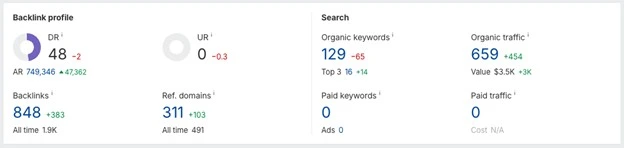
Content assets like long-form articles and guides can be used to leverage backlinks from high-authority websites.
Creating shareable content assets with links on your social media feed is also a good way to build awareness. Building relationships with industry leaders rather than just linking to their websites adds another layer of legitimacy to your link building.
7. Deploy Internal Linking Strategically
Internal linking is a simple way through which marketers can improve user engagement and page rankings. But don't make the mistake of overusing internal links because that can be detrimental to your user experience index.
Faced with too many links, users will not click any of them. Create internal links to high-value pages on your websites, like guides, case studies, or other pivotal articles.
Rather than just forcing keywords into your links, focus on being helpful to the users. Be as descriptive as possible without the linking text being too long. Internal linking also helps improve your topic clusters by linking content that supports each other.
8. Optimize Image Alt Text Throughout
Image alt text is one of the more underutilized but pivotal parts of the SEO ranking system. Image alt text is how search engines 'understand' images.
Search engine spiders cannot see images as we do, so they rely on alt text. Most brands just use basic text that is seldom accurate, or it would just be a placeholder.
It is no surprise that these do not rank as well as descriptive alt text content. Take care to clearly explain what the image is about and specific details, if any.
Relevant keywords should be included in the alt text that can be helpful for ranking and for the user to get context. Don't make the mistake of copying and pasting content from one image to another.
9. Focus On Search Intent and Not Just Keywords
The key to ranking above bigger competition on searches is to understand search intent. While keywords are vital to ranking, companies should research the 'context' behind the search.
For example, for the search 'best running shoes for beginners', the user doesn't want just one shoe. They're looking for a detailed comparison between different brands in one place.
Optimize content formats that are popular in your industry, like comparisons and guides. Having a detailed FAQ section on your post can help with keyword rankings and help users get vital information. Offer clear answers on popular topics in your niche and update your article consistently.
10. Streamline Website Structure
Many brands are still not aware of how powerful website structure is when it comes to being ranked in the top three.
Proper website design with different categories can help people get the most out of your website. It also helps search engine spiders understand what your website is about. It is vital that you maintain a logical hierarchy that allows users to navigate your website easily.
An aspect that many brands overlook is the URL structure - it should be clear without needless characters. Make sure that every page is easily navigable and check if there are broken links to pages that you might have updated recently.
Avoid confusing layouts and focus on keeping the website clean and usable.
11. Update Your Content Consistently
With the huge influx of information in modern times, content on any website is bound to become outdated. It is a good idea to periodically check your 'pillar pages' and confirm if the data is still valid today.
This is especially true for statistics-heavy pages, as they are the ones that are most prone to being outdated or changed.
Ensure that everything is clearly described on your website using simple language. Reading scores of 8-9 are great, depending on your audience. Try not to be too salesy in your content because that can put people off.
12. Work Towards Featured Snippets
Featured snippets are hands down the best way to feature right at the top. These rich snippets are placed even above sponsored links on search results to make it easier for users to click.
To get your website featured on these snippets, you need to have properly structured content that answers common questions in your niche.
Creating detailed FAQ sections and organizing information in the form of lists and tables can give you an advantage. Optimize your content so users can skim through the page. Use proper heading and subheading tags where appropriate so you have a better chance of being featured.
13. Improve User Experience (And Reduce Bounce!)
It is imperative that a website has top UI/UX scores when it comes to helping it rank on searches. UI/UX is part of the signals that Google uses to determine how friendly a website is to the average user.
These are basically how easy your website is to use for a person, including loading speed and navigation. Keep the navigation simple and intuitive without cluttering it with visual elements.
Ensure your CTAs are clearly displayed and descriptive enough for users to follow. Never include intrusive popups as part of your website experience. If a user is overwhelmed by the 'visual feedback' from your website, they are going to click away, and this results in high bounce rates.
14. Monitor and Refine SEO Through Tools
There are hundreds of SEO metrics that you need to keep track of in today's marketing pipelines, even for SMBs.
It can quickly become overwhelming if not for the availability of powerful SEO platforms and tools available today. Some of them are AI-assisted, which adds an extra layer of automation for common tasks.
Use tools like Ahrefs, SEMrush, and Moz for a myriad of things, from keyword tracking to monitoring multiple campaigns. Identify pages that need to be optimized and track backlink growth over time. Get unique insights from competitor SEO processes and improve your own.
Key Takeaways
● Research the right keywords for your brand based on search intent and demographics.
● Create content that is both actionable and usable by your community.
● Optimize your on-page SEO elements to rank high on searches quickly.
● Ensure short loading times to deliver a lag-free user experience.
● Work on keeping your website responsive and adjusting visuals for smaller displays